
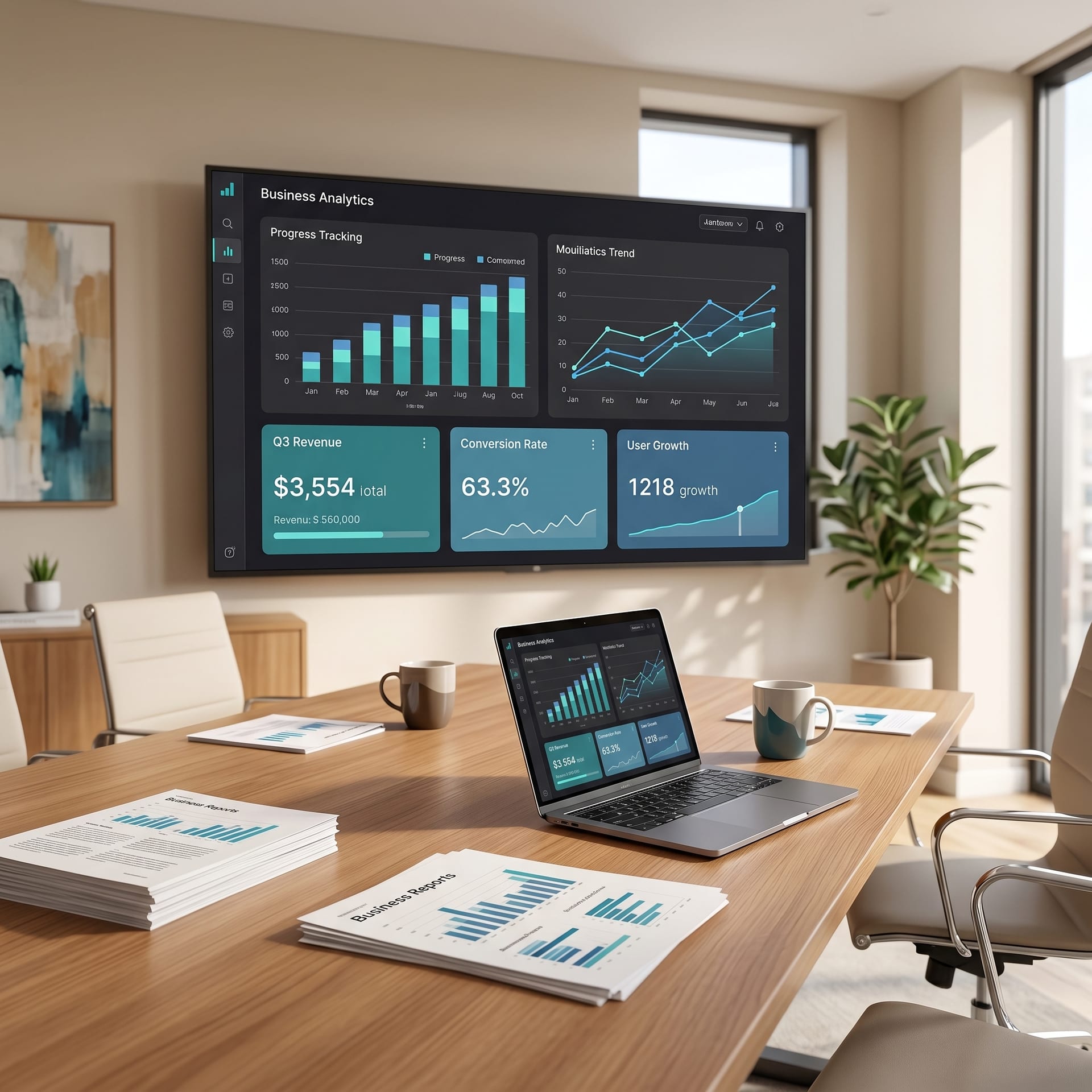
With more than 16 years of experience and work with over 100 brands in international markets, Doer has established itself as one of Latin America’s notable digital agencies. We combine strategy, creativity, technology and artificial intelligence to turn each company’s opportunities into concrete actions.
Having data does not guarantee clarity. Many businesses have reports from Google Ads, Meta Ads, GA4, social media, CRM and spreadsheets but still do not know which decision to make.
A digital marketing dashboard should solve that problem: turning scattered metrics into a clear view of what to keep, optimize or stop.
Quick answer
A digital marketing dashboard should show metrics connecting investment, campaigns, traffic, leads, sales quality and business results. Beyond likes or impressions, it should reveal whether campaigns generate real opportunities, what acquiring them costs and which actions to take.
Why many marketing reports are not useful
A report can contain many charts and still help nobody. Data needs a clear hierarchy to be useful.
A good dashboard prioritizes what matters instead of showing everything.
Reports often fall short when they:
- Mix metrics without context.
- Fail to distinguish channels.
- Do not show trends.
- Do not connect leads with sales outcomes.
- Do not explain which decision to make.
- Are built for presentation rather than operational use.
The dashboard should support decisions, not simply decorate an executive presentation.
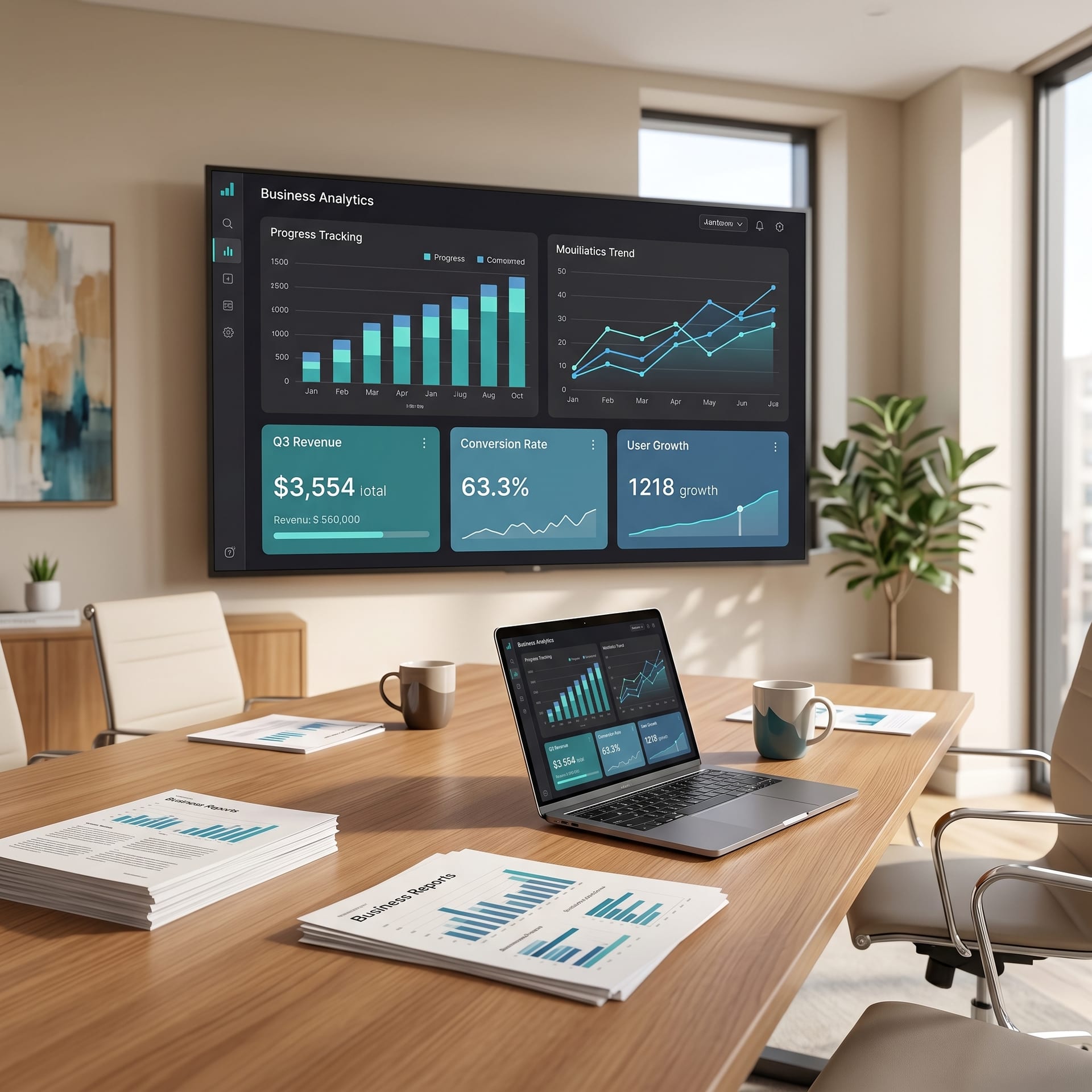
What a digital marketing dashboard should measure
Core metrics depend on the business model, but for a company investing in digital marketing, the dashboard should answer at least these questions:
- How much are we investing?
- Which channels generate the most leads?
- How much does each lead cost?
- Which campaigns generate higher-quality leads?
- Which landing pages convert better?
- What percentage of leads receive follow-up?
- How many leads become opportunities?
- What is the cost per opportunity or acquisition?
- Which campaigns should we optimize or pause?
Key metrics for paid advertising campaigns
For Google Ads, Facebook Ads and Instagram Ads, review:
- Investment.
- Impressions.
- Clicks.
- CTR.
- CPC.
- Conversions.
- Cost per lead.
- Conversion rate.
- CPA.
- ROAS when revenue is measured.
- Performance by campaign, ad set, ad and audience.
These metrics tell part of the story. Their real value emerges when connected to the CRM.
Key metrics for leads and CRM
A campaign may generate many forms but few qualified leads. The dashboard therefore needs data from after the conversion.
Recommended metrics:
- Leads by source.
- Qualified leads.
- Contacted leads.
- Average response time.
- Successful contact rate.
- Rate of progression to opportunity.
- Opportunities by channel.
- Attributable sales or closed deals where possible.
- Reasons for disqualification.
This makes it possible to optimize the entire acquisition and follow-up process as well as the campaign.
GA4, Google Ads, Meta Ads and CRM should connect
A useful dashboard integrates several sources. Reviewing each platform separately leaves the team without a complete picture.
Common sources include:
- GA4 for website behavior and events.
- Google Ads for search and advertising.
- Meta Ads for Facebook and Instagram.
- CRM for lead quality and progression.
- Forms and landing pages.
- WhatsApp or service tools.
Integration moves the question from “How many leads did we get?” to “Which channel generated leads most likely to become opportunities?”
Turning data into weekly decisions
A dashboard should support weekly decisions as well as month-end reviews.
A useful routine can include:
- Reviewing investment and results by channel.
- Identifying campaigns with high costs or low volume.
- Reviewing lead quality in the CRM.
- Finding bottlenecks in landing pages or follow-up.
- Making decisions: pause, optimize, test or reallocate budget.
- Documenting learnings.
If the dashboard does not produce decisions, simplify it.
A checklist for a useful marketing dashboard
A well-designed dashboard should be:
- Clear to marketing teams and leadership.
- Connected to business objectives.
- Updated automatically where possible.
- Organized by channel, campaign and funnel stage.
- Able to show trends as well as snapshots.
- Focused on quality metrics as well as volume.
- Easy to understand in a few minutes.
- Actionable: it should help people decide.
Doer’s approach
At Doer, dashboards help teams see clearly and act more effectively. Measurement should become a tool for optimizing advertising, improving follow-up, identifying opportunities and organizing decisions, rather than ending in unread reports.
Agree on definitions before comparing
A WhatsApp click, received form, qualified lead and sale are different stages. Name each indicator precisely and document its source, update date and deduplication criteria.
If two platforms show different conversions, review their attribution windows, time zones and event definitions. To evaluate profitability, revenue and investment must follow the same analytical criteria.
Frequently asked questions
What is a digital marketing dashboard?
It is a visual tool bringing together campaign, website, lead and CRM data to understand marketing performance and make decisions.
Which metrics should a marketing dashboard include?
It should include investment, leads, cost per lead, conversion rate, lead quality, source, sales progression, CPA and ROAS where applicable.
Why connect a dashboard to the CRM?
It reveals which campaigns generate real opportunities beyond forms or contacts without follow-up.